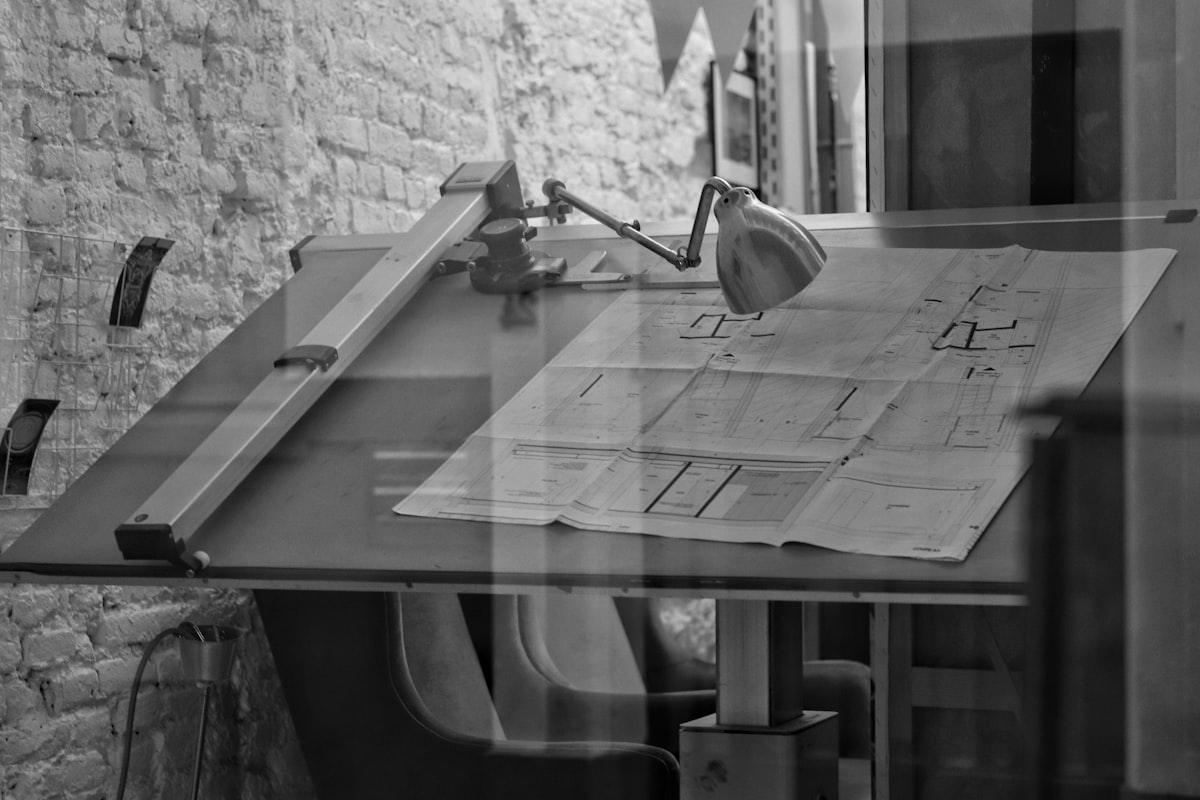
The Real Cost of Bidding Jobs You Were Never Going to Win

Co-Founder, Comms Center
Zack has spent 10 years in commercial construction, working closely with GC estimators on subcontractor bid management and project communications. We built Comms Center to fix the coordination problems he saw firsthand.
A mid-size GC with one estimator and a part-time assistant spends roughly 40 hours on a competitive hard-bid pursuit. That’s not a guess. Count the plan review, the sub outreach, the bid day coordination, the number leveling, and the proposal assembly. Forty hours is conservative on anything above $2 million. At a fully loaded cost of $85 an hour, salary, benefits, overhead, that’s $3,400 per bid. Lose 20 in a year, which is not unusual for a firm chasing everything on the plan rooms, and you’ve spent $68,000 walking away with nothing.
That number doesn’t include the sub time you burned. Every estimator who invited 15 subs per trade across 20 pursuits just asked hundreds of people to do work that produced zero contracts. Some of those subs eventually stop responding. Not because they’re unreliable. Because the math works against them too.
Selectivity is not a mindset. It’s a P&L line.
The firms that treat bid volume as a sign of health are measuring the wrong thing. A 10% win rate on 30 pursuits means you won 3 jobs and lost 27. The 27 losses are not neutral. They consumed estimating capacity, sub relationships, and attention that could have gone toward the 3 jobs where you actually had an edge, better owner relationship, tighter scope knowledge, preferred sub list already in place.
Here’s the real problem with low-selectivity bidding: the jobs you win when you’re spread thin are often not the ones you should have won. The estimate got 18 hours instead of 40. Sub coverage was incomplete on two trades. The number went in light because no one had time to chase a second mechanical bid. You win a job at a margin that assumes everything goes right, with a subcontractor bench assembled under time pressure. That’s not a win. That’s a deferred loss.
A GC with a 25% win rate on 12 carefully chosen pursuits outperforms a GC with a 10% win rate on 30 every time, in revenue per estimating hour, in margin quality, and in project execution. The 12-pursuit firm had time to read the exclusions, cover every trade, and submit a number they could actually build at.
The Costs That Never Appear on a Timesheet
Estimating hours are the obvious cost. But three others don’t show up in the time sheet, and they compound.
Sub fatigue is the first one most firms don’t see coming. When you invite the same 200 subs to every pursuit regardless of fit, your invitation starts to look like noise. Response rates drop. The subs who actually want to work with you stop distinguishing your real pursuits from the ones you were never going to win. You’ve trained them to ignore you, and you’ll feel it on the bid where coverage actually matters.
Bid shopping reputation is the next problem. Some of the jobs you’re losing, you’re losing because you’re known as a firm that uses bids as check numbers. Bid shopping is not just an ethics problem, it’s a market problem. The sub community is smaller than it looks, and the ones worth having talk to each other. A firm that doesn’t understand this is making an expensive mistake, and making it repeatedly.
The third cost is opportunity cost on the pursuit that mattered. The week your estimator spent on the public school bid you had a 5% chance of winning was the week he couldn’t give a real proposal to the healthcare owner who called on Tuesday and already liked your firm. That’s the real loss. Not the bid you chased. The bid you didn’t have capacity to put your best work into.
The Filter Is the Work
The discipline is in the filter, not the effort. Before a pursuit goes into the active queue, someone needs to answer three questions honestly: Do we have a relationship with the owner or architect? Do we have a sub bench that can cover this scope competitively? And do we have the estimating bandwidth to do this job justice in the time available?
If the answer to two of those is no, the pursuit is not a growth opportunity. It’s a $3,400 exercise in optimism.
Win rate is a lagging indicator of how well a firm is selecting work, not how hard the estimating team is working. Firms that track their bidding costs against win rates tend to get selective fast once the number is visible. The problem is most firms don’t track it. The losses get filed away. The cost is absorbed invisibly into overhead, and next quarter the cycle repeats.
Run the number. Twenty losses at $3,400 each is $68,000. At 40 losses, and some firms are there, it’s $136,000. That’s a full-time estimator. That’s four months of sub follow-up on jobs you actually have a chance of winning. Stop treating selectivity as caution. It’s where the math points when you’re willing to look at it.
Comms Center gives estimators a real-time view of where every active pursuit stands, which trades are covered, which subs have acknowledged, and where follow-up has gone cold. When you’re choosing which bids to chase, knowing you can actually execute the outreach on the ones you commit to changes the calculation. See how it works at commscenter.com.
Frequently Asked Questions
- How much does it actually cost a GC to lose a bid?
- A fully loaded estimate on a competitive hard-bid pursuit runs 30 to 50 hours depending on project size and complexity. At $80 to $90 per hour in fully loaded estimating cost, a single lost bid costs $2,500 to $4,500 in direct labor. That doesn't count sub relationship capital spent or the opportunity cost of capacity that could have gone elsewhere.
- What win rate should a GC estimating team be targeting?
- There's no universal number, but a firm bidding competitively on negotiated and hard-bid work should be north of 20% on the jobs it fully pursues. If you're under 15%, the selection process is the problem, not the estimates. Chasing volume to improve win count is the wrong direction, fewer, better-chosen bids produce more margin per estimating dollar spent.
- How do you decide which bids are worth pursuing?
- Three filters matter most: a real relationship with the owner or design team, a sub bench that can cover the critical trades competitively, and enough estimating bandwidth to actually review the drawings before bid day. If two of those aren't in place, the probability of winning is low and the cost of losing is still full price. Document your go/no-go decisions, after a year, the pattern tells you where your firm actually wins.
Stay in the loop
Get updates from Comms Center
Leave your email and we'll reach out when we have something worth sharing.
Related Articles
April 10, 2026
The Subcontractor Prequalification Process for GC Estimators
A step-by-step walkthrough of the subcontractor prequalification process, from database setup to bid day decisions, built for GC estimating teams.
April 8, 2026
How Labor Escalation Is Changing What Goes Into a GC Bid
Labor costs are climbing faster than most GC bids account for. Here's how estimators are adjusting for escalation before it eats the job.

April 6, 2026
What Is Bid Management Software? A GC Estimator's Guide
What bid management software actually does, where it falls short, and what GC estimators should look for before choosing one.